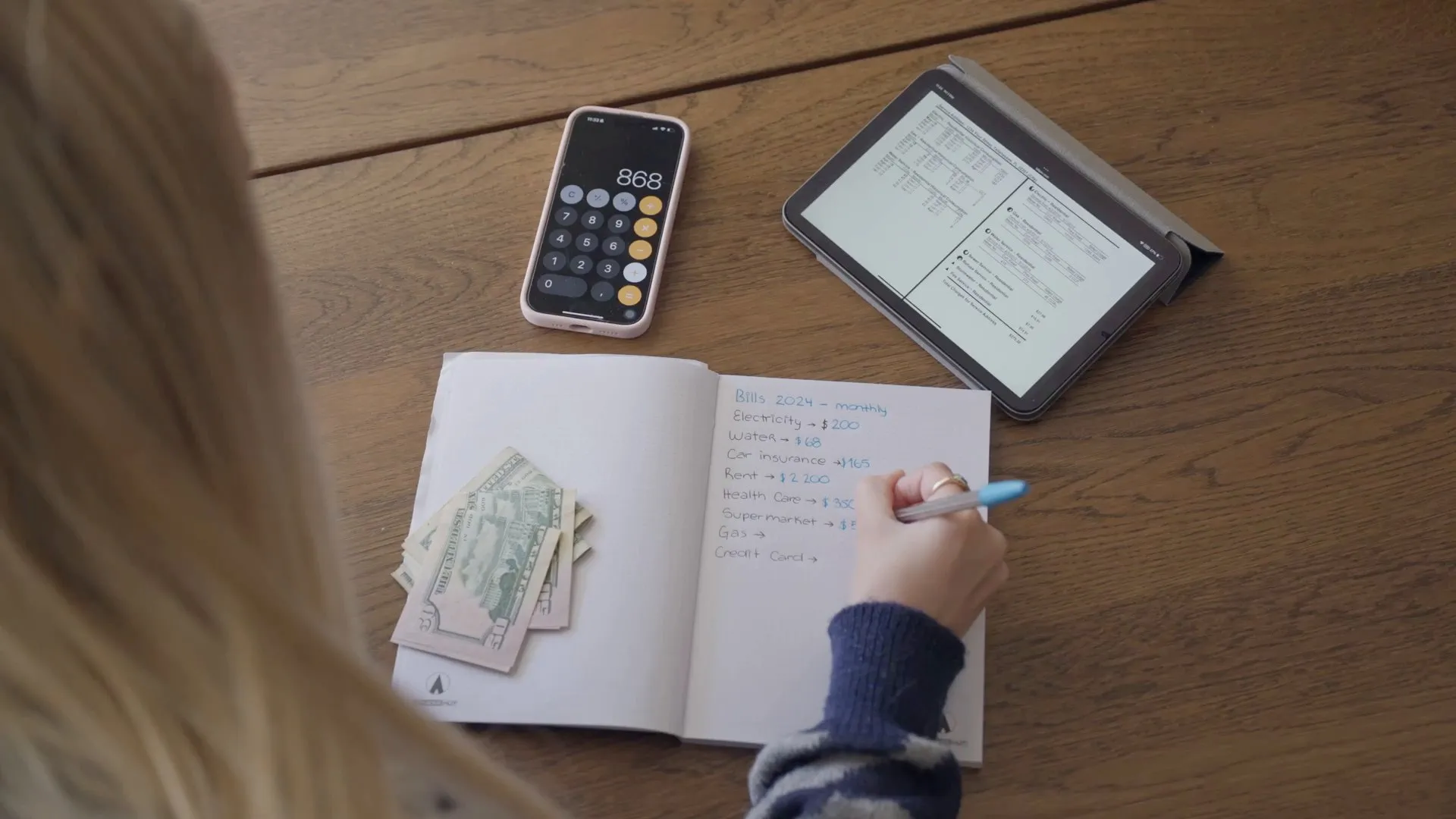

The cash envelope system is a budgeting method that gives specific amounts of money to different spending categories. Traditionally, physical cash is placed into labeled envelopes and used only for the category assigned to each envelope.
The idea is simple: once the money allocated to a category is gone, you generally stop spending in that category until the next budget period or deliberately move money from another category.
This method can be especially useful for variable expenses such as groceries, dining out, entertainment, clothing and personal spending.
The envelope system is not about carrying a large amount of cash everywhere. It is about creating visible spending limits and making your budget easier to follow.
In This Guide
- What Is the Cash Envelope System?
- How Does the Envelope System Work?
- Which Categories Should You Use?
- How to Start a Cash Envelope System
- Cash Envelope Example
- Digital and Virtual Envelope Methods
- Advantages and Limitations
- Simple Rules for Success
- Common Mistakes to Avoid
- Alternatives to Cash Envelopes
- Final Thoughts
What Is the Cash Envelope System?
The cash envelope system is a category-based budgeting method. You decide how much money you want to spend in selected categories and separate that money so you can see the limit.
For example, you might create envelopes for:
- Groceries
- Dining out
- Entertainment
- Clothing
- Personal spending
- Household purchases
If your monthly grocery budget is $500, you could place $500 into the grocery envelope at the beginning of the budgeting period.
Each grocery purchase then comes from that category rather than from a general pool of available spending money.
How Does the Envelope System Work?
The traditional method follows a straightforward process.
- Create your monthly budget.
- Identify categories where you tend to overspend.
- Set a spending limit for each category.
- Put the planned cash amount into each labeled envelope.
- Use money only from the appropriate envelope.
- Stop or adjust spending when an envelope gets low.
- Review the results before creating the next month's budget.
The physical separation makes spending more visible. Instead of checking only your total bank balance, you can see how much remains for a specific category.
Which Categories Should You Use?
You do not need an envelope for every expense. The system usually works best when you use it for categories that are flexible or easy to overspend.
Groceries
A grocery envelope can create a clear weekly or monthly limit for food purchases.
Dining out
Restaurants, takeout and coffee purchases can be placed into one category if that makes tracking easier.
Entertainment
Movies, events, games, hobbies and other entertainment expenses can have their own limit.
Clothing
A clothing envelope can help prevent occasional purchases from quietly becoming a large monthly expense.
Personal spending
This category can provide some flexible money while keeping the amount intentional.
Household spending
Cleaning supplies, small household items and other flexible purchases may fit here.
Start with three to six categories rather than creating dozens of envelopes. You can add categories later if the system proves useful.
How to Start a Cash Envelope System
Step 1: Review your current spending
Look at your recent transactions and identify categories where spending is inconsistent or difficult to control.
Step 2: Choose your categories
Select only the categories where a visible spending limit would be useful.
Step 3: Set realistic limits
Use your actual spending history to create a realistic starting budget rather than choosing an amount that is impossible to maintain.
Step 4: Decide how often to fund the envelopes
You can fund them monthly, biweekly, weekly or according to your pay schedule.
Step 5: Label each envelope
Clearly write the category name and, if useful, the planned amount on each envelope.
Step 6: Track what you spend
Every purchase should reduce the available amount in its corresponding category.
Step 7: Review at the end of the month
Look at which categories had money left over and which ones regularly ran short.
Cash Envelope System Example
Imagine that you decide to use envelopes for four variable spending categories.
| Category | Monthly Limit | Example Purpose |
|---|---|---|
| Groceries | $500 | Food and household groceries |
| Dining Out | $150 | Restaurants and takeout |
| Entertainment | $100 | Movies, events, hobbies |
| Personal | $100 | Flexible personal purchases |
| Total | $850 | Selected categories only |
These amounts are examples rather than recommendations. Your spending limits should be based on your own income, expenses, household needs and financial priorities.
If you spend $120 on dining during the month, you would have $30 remaining in that category.
You could leave the remaining amount in the envelope, roll it into the next period if your system allows or intentionally reassign it to another financial priority.
Digital and Virtual Envelope Methods
You do not necessarily need to use physical cash to apply the underlying idea.
A digital envelope system can use separate savings buckets, spending categories, budgeting software, spreadsheets or other account features that let you assign money to specific purposes.
The goal is still the same: make your available money and spending limits visible.
Spreadsheet method
Create a column for each spending category and subtract purchases from the starting balance.
Digital banking buckets
Some financial institutions offer features that allow customers to organize money into separate goals or sub-accounts. Availability varies by institution and account.
Budgeting applications
Some budgeting tools use category-based systems that provide a digital version of the envelope concept.
Advantages and Limitations of the Envelope System
Potential advantages
- Makes spending limits visible.
- Can reduce impulse spending.
- Makes variable expenses easier to monitor.
- Creates a clear connection between spending and your budget.
- Can be simple to understand.
Potential limitations
- Carrying cash may be inconvenient.
- Some purchases require electronic payment.
- Losing physical cash can be difficult to recover.
- Managing many envelopes can become complicated.
- Cash transactions may require additional manual tracking.
The best approach depends on your spending habits, payment methods and comfort with cash.
Simple Rules for Making the System Work
Rule 1: Start with problem categories
Focus on areas where you actually need more control instead of converting your entire financial life into cash.
Rule 2: Check the balance before spending
Make it a habit to see how much remains before making a purchase.
Rule 3: Give every category a realistic amount
A limit that is consistently too low will make your budget frustrating rather than useful.
Rule 4: Review your results
Use your actual spending to improve future budgets.
Rule 5: Allow intentional adjustments
If an important expense changes, you can move money between categories deliberately rather than abandoning the entire budget.
Common Cash Envelope Mistakes
Creating too many envelopes
Too many categories can turn a simple budgeting method into a time-consuming system.
Setting unrealistic limits
If your grocery budget is consistently below what your household actually needs, the system will quickly become frustrating.
Forgetting digital purchases
Online purchases still need to be deducted from the appropriate category.
Borrowing without recording it
If you move money from one category to another, record the change so you know what happened to your original plan.
Treating the method as a punishment
A budget should help you make intentional decisions, not make every purchase feel negative.
Alternatives to Cash Envelopes
If physical cash does not fit your lifestyle, you can use the same category-based thinking in other ways.
- Zero-based budgeting
- Digital budgeting categories
- Separate savings accounts
- Spreadsheet-based budgeting
- Weekly spending limits
- Sinking funds
Our guide to zero-based budgeting explains another approach that assigns your expected income to specific financial purposes.
You can also explore the complete budgeting guide if you are building your first monthly budget.
Cash Envelope System Checklist
- □ Review your recent spending.
- □ Identify categories where you overspend.
- □ Set realistic spending limits.
- □ Label your envelopes or digital categories.
- □ Fund each category according to your plan.
- □ Track every purchase.
- □ Review category balances regularly.
- □ Adjust the system when your circumstances change.
Final Thoughts
The cash envelope system is a straightforward way to make spending limits more visible. By separating money into categories, you can create a clearer connection between your budget and your everyday purchases.
You do not have to use physical cash for every expense. The same principle can be adapted to digital banking, spreadsheets or budgeting applications.
Start small. Choose a few categories where you want more control, set realistic limits and review your results after each budgeting period.
Over time, the goal is to create a budgeting system that helps you spend intentionally while still making room for saving and your larger financial goals.
Choose three spending categories where you most often lose track of your money. Give each category a realistic limit and track every purchase for the next budgeting period.