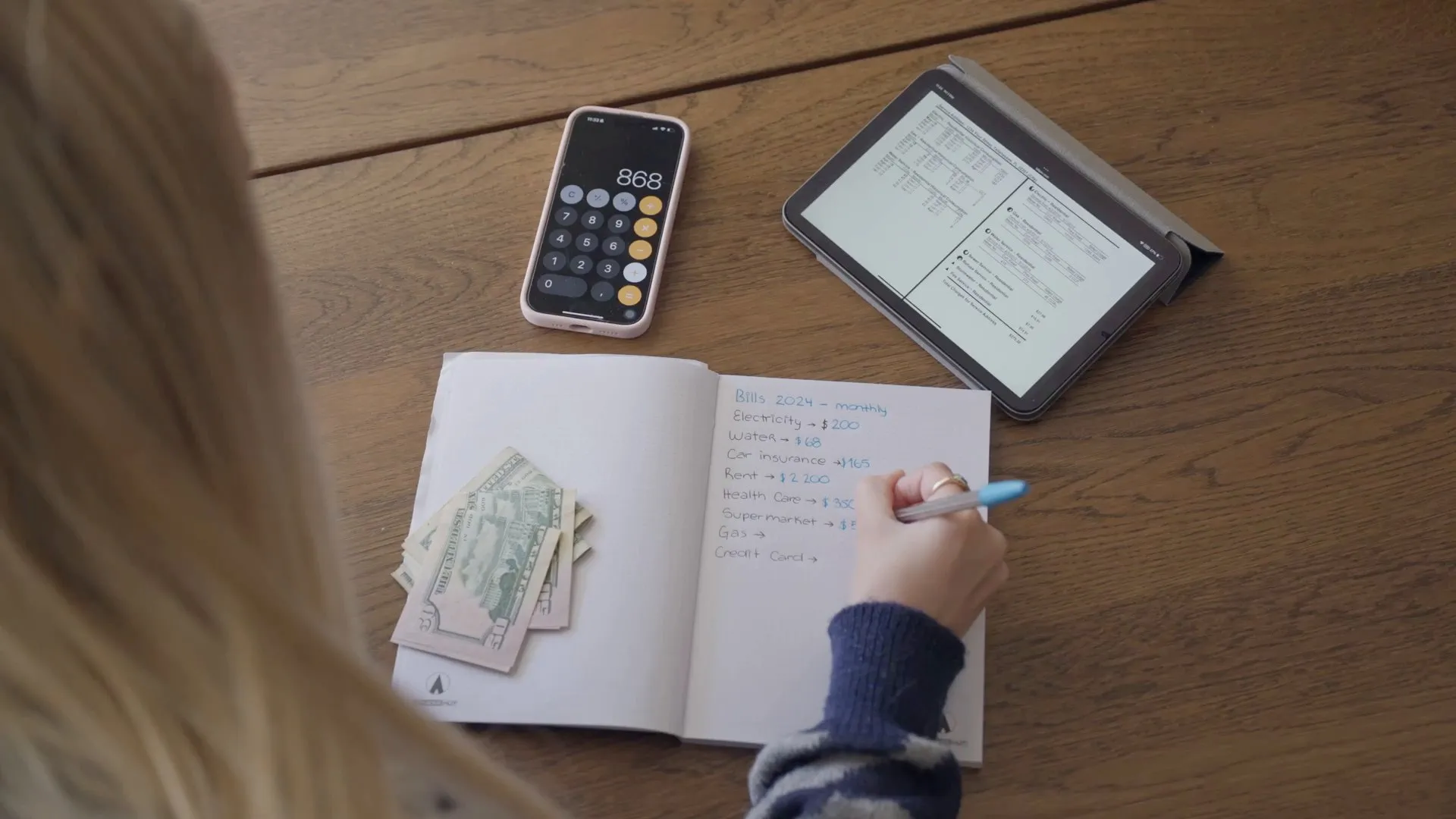

Creating a budget is only the beginning. The real challenge is building a system that reflects your actual income, expenses, priorities and everyday spending habits.
Many budgeting problems are not caused by a lack of discipline. They happen because the budget itself is unrealistic, incomplete, too complicated or disconnected from how you actually use your money.
Understanding the most common budgeting mistakes can help you create a plan that is more practical and easier to maintain.
Your budget does not need to work perfectly from day one. Review your actual spending, adjust your categories and improve the system over time.
1. Not Tracking Your Spending
One of the biggest budgeting mistakes is creating spending limits without first understanding where your money is actually going.
If you underestimate groceries, subscriptions, transportation, dining or other recurring expenses, your budget may look good on paper but fail in practice.
How to avoid it
Review your recent bank and credit card transactions before creating or changing your budget. Look at at least one full month of spending and preferably several months if your expenses vary.
2. Underestimating Your Expenses
A common mistake is choosing spending amounts that sound ideal instead of amounts supported by your actual spending history.
For example, if your household normally spends around $600 per month on groceries, immediately setting a $300 limit may create repeated budget shortfalls.
How to avoid it
Start with realistic numbers. Once you understand your spending patterns, look for gradual ways to reduce expenses rather than setting an extremely low target overnight.
3. Forgetting Irregular Expenses
Not every expense arrives every month.
Annual insurance bills, vehicle maintenance, holidays, gifts, school expenses, memberships, property-related costs and other occasional expenses can create major budget surprises.
How to avoid it
Make a list of expenses that happen periodically and estimate their annual cost.
| Expense | Annual Example | Monthly Set-Aside |
|---|---|---|
| Vehicle maintenance | $600 | $50 |
| Gifts | $480 | $40 |
| Annual subscriptions | $240 | $20 |
| Home expenses | $600 | $50 |
A sinking fund can then help you gradually set aside money for these future expenses.
4. Making the Budget Too Strict
A budget that leaves no room for flexible spending can become difficult to maintain.
Completely eliminating every restaurant meal, entertainment purchase, hobby or personal expense may work temporarily for some people, but it can also make the plan difficult to sustain.
How to avoid it
Include reasonable amounts for discretionary spending while still keeping your larger financial priorities in view.
The goal is intentional spending, not necessarily spending nothing.
5. Ignoring Small Purchases
Small purchases can be easy to overlook because each transaction may seem insignificant.
Coffee, delivery fees, app purchases, convenience snacks, small online orders and recurring digital services can add up over time.
How to avoid it
You do not need to eliminate every small purchase. Instead, include these expenses in the appropriate categories so your budget reflects real spending.
6. Forgetting to Budget for Savings
Another mistake is treating savings as whatever happens to remain after spending.
When saving is not part of the plan, other expenses can easily consume the available money.
How to avoid it
Include specific savings goals in your budget. These might include an emergency fund, a future purchase, retirement or another financial goal.
Even a modest planned contribution can be easier to maintain than an undefined goal to "save more."
7. Not Including Debt Payments
Debt payments need to be part of your monthly cash flow plan.
Minimum payments should be accounted for, while any additional debt payments should also have a clear place in your budget.
How to avoid it
List each debt, its required payment, interest rate and due date. Then decide how additional money, if available, will be allocated.
Debt strategies can depend on your individual financial situation. Review the terms of your accounts and consider professional advice when appropriate.
8. Using Unrealistic Spending Targets
A budget is a planning tool, not a test of how little you can spend.
Setting extremely low limits without considering your household size, location, lifestyle or essential costs can make the budget fail repeatedly.
How to avoid it
Use your previous spending as a starting point. Then make small adjustments that are measurable and achievable.
9. Making the Budget Too Complicated
A budget with dozens of categories, complicated formulas and constant manual updates can become difficult to maintain.
Complexity is not automatically a sign that a budget is better.
How to avoid it
Start with the categories that matter most. You can always add more detail later if you need it.
A simple system that you consistently use can be more useful than a sophisticated system that you abandon.
10. Not Reviewing the Budget
Your budget should not be something you create once and never look at again.
Income can change. Bills can increase. Priorities can shift. A household can grow. Transportation costs can change.
How to avoid it
Schedule a short budget review at least once each month.
Ask yourself:
- Which categories went over budget?
- Which categories had money left?
- Were there unexpected expenses?
- Did income change?
- Are my savings goals still realistic?
11. Treating the Budget as Permanent
A budget is a snapshot of your current financial situation and plans.
It should change when your circumstances change.
How to avoid it
Update your budget after major changes such as a new job, salary change, move, new recurring bill, change in household size or major financial goal.
12. Ignoring Irregular Income
People with freelance, commission-based, seasonal or otherwise variable income may need a different budgeting approach from someone with a consistent monthly paycheck.
How to avoid it
Consider building your essential monthly plan around a conservative income estimate and keeping additional income available for savings, taxes, business expenses, debt or future months as appropriate.
If your income changes regularly, avoid assuming that your highest-earning month will repeat every month.
13. Budgeting Without Clear Priorities
A list of expenses is not necessarily a complete financial plan.
If you do not know what you are trying to achieve, it can be difficult to decide which expenses should receive more attention.
How to avoid it
Identify a few priorities such as:
- Building an emergency fund
- Reducing high-interest debt
- Saving for a major purchase
- Building long-term investments
- Preparing for known future expenses
Then make sure your budget reflects those priorities.
14. Giving Up After One Bad Month
Almost every budget can have an imperfect month.
An unexpected expense, social event, repair or simple overspending does not automatically mean your entire budgeting system has failed.
How to avoid it
Treat mistakes as information.
Ask why the category went over budget and decide whether you need to reduce spending, increase the category, create a sinking fund or change the timing of the expense.
15. Focusing Only on Cutting Expenses
Reducing unnecessary expenses can help, but budgeting does not have to be only about cutting things out.
Your financial plan also includes income, savings, debt, long-term goals and how you allocate your available money.
How to avoid it
Look at both sides of your financial picture. Along with reviewing expenses, consider whether there are reasonable ways to increase income, improve your skills, negotiate recurring costs or make your existing money work toward your goals.
What a Better Budget Looks Like
| Common Problem | Better Approach |
|---|---|
| Guessing expenses | Use recent spending history |
| Ignoring annual bills | Plan monthly sinking-fund contributions |
| Extremely strict limits | Use realistic spending targets |
| No savings category | Give savings a defined place |
| Never reviewing the budget | Review and adjust monthly |
| Too many categories | Keep the system simple |
Monthly Budget Review Checklist
Use this short checklist at the end of each month:
- □ Compare planned income with actual income.
- □ Review essential expenses.
- □ Check variable spending categories.
- □ Review subscriptions and recurring charges.
- □ Check debt payments.
- □ Review savings contributions.
- □ Identify unexpected expenses.
- □ Adjust next month's categories.
- □ Check progress toward financial goals.
What to Do If Your Budget Keeps Failing
If you repeatedly go over budget, do not immediately assume that you need more discipline. First examine the structure of the budget.
Ask these questions:
- Is my income estimate accurate?
- Did I include all recurring expenses?
- Did I account for irregular expenses?
- Are my spending limits realistic?
- Am I tracking all purchases?
- Is the budget too complicated?
- Have my financial priorities changed?
The answers can reveal whether you need to adjust your spending, increase a category, simplify the system or rethink the overall plan.
Final Thoughts
Budgeting mistakes are often useful signals. They can show you where your original assumptions did not match your real financial life.
Instead of trying to create a perfect budget, focus on building one that you can realistically follow and update.
Track your spending, account for irregular expenses, keep your categories manageable, make room for savings and review your plan regularly.
Most importantly, give your budget a purpose. When your spending plan is connected to meaningful financial goals, it becomes more than a list of restrictions—it becomes a tool for making intentional decisions with your money.
Review your last month's spending and identify the three categories where your budget was least accurate. Adjust those categories before creating your next monthly plan.